Hz. Mahmud Sami Ramazanoğlu Biography (English)
In the Name of Allah, the Most Gracious, the Most Merciful
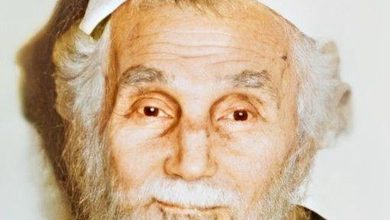
A brief biography of Sheikh Hazrat Sami (may Allah sanctify his lofty secret), written by his spiritual secretary and the lantern for the seekers of this sublime path after his passing, Sheikh Omar Muhammad Ozturk (may Allah preserve him).
Sheikh Sami (may Allah sanctify his lofty secret) was born in the year 1892 AD in the city of Adana, in the neighborhood of Tepebag. He honored the world with his birth in this year. His father was named Mujtaba Efendi, his mother was Lady Umm Kulthum, his great-grandfather was Abdul Rahman, and his older ancestors were Ishaq and Hussein Efendi. His noble lineage extends to one of the major Turkish tribes known as the Ramazanoglu tribe (the clan of Ibn Ramazan). Abdul Hadi Efendi was the last to rule this tribe, and he was the great-grandfather of Sheikh Sami Efendi (may Allah have mercy on him).
Based on the statement of Abdul Hadi Efendi, it becomes clear to us that the origin of the Ramazanoglu tribe is from the Oghuz. Anyone who examines his noble lineage closely will find that this tribe’s roots extend back to the Turkish Sovereign, Nur al-Din al-Zanki, known as “The Martyr” (may Allah Almighty have mercy on him), and from him to the great Companion, Khalid bin al-Walid (may Allah be pleased with him), who was named “The Sword of Allah.”
The following is a summary of his life (may Allah sanctify his secret) quoted from his own noble words: Sheikh Sami said:
“My birth was in the year 1308 AH in Adana, at the Waqf Saray. Before my birth, someone came to the door of our house and said: ‘In a short time, God willing, a birth will take place in this house, and it will be a boy. After his birth, name him Sami. He will be a good person, God willing.’ Then that man left.
After a short period, the birth took place, and it was a boy just as that man had prophesied. They named him Mahmud Sami. Then that man came back again, and they informed him that the birth had concluded, and they were blessed with a boy whom they named Muhammad Mahmud Sami.
When the man learned this, he said: ‘Give me my trust that is in the chest.’ The household gave him the trust. The man said: ‘This is not what I am asking for. Give me the original trust (belonging to me) that is in the chest.’ So they gave it to him, and the man became very happy with the return of his trust, prayed for the household, and left.”
Sheikh Sami (may Allah have mercy on him) commented on this important piece of information, saying: “Record this important information (meaning, write it down). The man who came to the door of the house was not just any ordinary man.” The Sheikh continued his speech, addressing his spiritual secretary, Sheikh Omar Muhammad Ozturk: “Record this information exactly as it is. By the permission of Allah Almighty, it will be published in the future, and it will be good, God willing.”
(Note: This information is transcribed from the diaries of Mr. Omar Kirazoglu, who was the husband of Sheikh Sami’s daughter).
From the aforementioned information, we understand that his full name was “Muhammad Mahmud Sami.” We also note from his own handwriting in Latin script on the declaration forms (Beyanname) for the title deed registration at the Cadastre Directorate that his name at the signature line was only “Sami.” It was also like this on his identity card (meaning a single name).
What we learn from this detail is that during that period, the use of certain names was prohibited. Therefore, they used to hide some of their names out of caution and prudence. We also know that the birth of the Sheikh was in the Seyhan province of Adana, in the Kayali Bag neighborhood, on Abdullah Sabunju Lane. From this, it becomes clear to us that all those old names were eventually changed to other names.
Ever since he was named “Sami” after his birth, the Sheikh carried all the characteristics and impacts of this high glad tiding that was hidden within his name. The traces of this blessed name appeared throughout his noble life, as far as our knowledge encompasses. All his states indicated that he was a “possessor of a lofty station.”
In an era of ignorance where the rulings of the Truth were being removed and replaced by human constitutions (the Republic), the majority of society argued to justify their un-Islamic behavior, saying: “Under the conditions and laws surrounding us, and according to the requirements of this modern era of science and progress, we cannot apply all the rulings of the Islamic religion except to the extent of our capacity.”
Sheikh Sami completely erased this claim and argument through all his states and actions, which continued without interruption throughout his entire life—spanning nearly a century. Through his noble life, he proved that we can indeed live and pass our days by applying the rulings of the Islamic religion—which will remain valid until the Day of Resurrection—and by strictly following the Sunnah of the Messenger of Allah (peace and blessings be upon him) letter by letter, even when tribulations multiply and reach their absolute peak.
Sheikh Sami was unique in his era, and he is one of the great saints whose appearance is rare across centuries. This is the testimony of one of the great saints of Allah regarding Sheikh Sami, and from this statement, his high and unique station among the people of Allah becomes fully evident.
During his childhood, his honorable mother used to send him outside to play with his peers. However, his Eminence would sit, placing his hands over his knees politely, in the exact posture of sitting during the Tashahhud prayer. He would look intently into the distance, deeply absorbed in thought.
The reason for this was his adherence since childhood to the Sunnah of the Prophet (peace and blessings be upon him), as the posture of the Prophet during the Ascension (Mi’raj) was exactly like this. Accordingly, Sheikh Sami continued to hold fast to this prophetic Sunnah throughout his entire life. No one ever saw him in a posture contrary to this.
When he was asked about the reason for his sitting and why he did not play with his peers, his answer was: “We were not created for play.” This statement is an allusion to the prophetic Hadith and clear evidence of his strict adherence to following his Sunnah.
Sheikh Sami’s life lasted for 96 years, during which he strictly followed the Sunnah of the Messenger of Allah. This following was a complete and perfect devotion, the likes of which we rarely find today except in books of biographies and virtues.
From his blessed birth until his transition to the eternal abode, his adherence to the Sunnah of the Messenger of Allah continued with absolute submission, day and night, in his movements and in his stillness. As mentioned in the verses of Pir Efendi, and as the great Companion Abdullah bin Omar described the complete adherence to the prophetic Sunnah, Sheikh Sami sacrificed his entire noble life following the pure Sunnah at the threshold of Muhammad the Chosen One, without giving any room or intervention for human intellect in this devotion.
Just as Sheikh Muhyiddin ibn al-Arabi said: “True miracle (Karamah) is spiritual miracle, which is the success in being able to apply the Sunnah of the Messenger of Allah completely twenty-four hours a day (meaning at all times). This is the definition accepted by us.” The life of Sheikh Sami was a symphony of spiritual miracles that continued throughout his entire noble life.
Sheikh Muhyiddin ibn al-Arabi also said: “The people of Allah (the saints) look at the manifestation of miracles from themselves with the same aversion that women look at their states of menstruation and post-natal bleeding.”
Sheikh Sami was extremely cautious to the utmost limit in applying what this noble saying implied. Once, in the second half of the year 1970 AD, he was in a gathering at a house in Erenkoy, and the topic of the session was the miracles of Sheikh Abdul Qadir al-Jilani.
When Sheikh Sami reached the part of the story regarding the rescue of the Armenian boy from the district of Misis and the village of Abduloglu (belonging to the city of Adana)—when all his bags fell from his boat, and he sought help through Sheikh Abdul Qadir, and how he was saved from that predicament through the spiritual support of the Sheikh—suddenly, Dr. Baha Bey, who was considered one of the loving brothers, stood up from the middle of the gathering. With a pure and innocent heart, he raised his voice and said: “By Allah, this person (meaning Sheikh Sami Efendi) is the Abdul Qadir al-Jilani of our era! By Allah, whenever I found myself in tight circumstances or severe hardships and said: ‘Yatish ya Hazrat Sami’ (Succor me, O Hazrat Sami!), by Allah, all my problems were immediately resolved through his manifest spiritual support.”
When Dr. Baha Bey cried out in this manner, Sheikh Sami broke off the gathering, contrary to his well-known habit, and ended it by saying: “Al-Fatiha,” even though the session had only started a short while before.
He turned and addressed the poor servant (meaning Mr. Omar Muhammad Ozturk): “Prepare the car.”
While leaving the house (without completing the gathering), he said to the host: “We have accepted your hospitality, and may Allah be pleased with you.” He left the house without eating anything. This was a magnificent lesson taught in his unique way to anyone who openly exposed his secret or manifested his miracles.
Through this, Sheikh Sami—whose entire life was a chain of spiritual miracles (meaning steadfastness/Istiqaamah)—was teaching us to hide the miracles issuing from his noble self.
From the essence of this story, we understand that miracles are not something to be sought after, but if they do appear, they are a mercy from Allah Almighty for those who witness them. This obliges us to praise Him. It also teaches us the necessity of continuing on the path of Truth with gratitude and steadfastness, without becoming attached to the miracle itself. This leads to the permanence of our hearts—which are prone to change and turning—in staying with Allah, who is the ultimate goal, while avoiding all distractions.
“No people abandon Jihad except that they are humiliated.”
Hazrat Sami (may Allah sanctify his secret) used to teach and make all his students memorize this noble saying. Through his noble life, he taught us Jihad in the way of Allah Almighty through both words and deeds, directly implementing the ruling of the Quranic verse: In the name of Allah, the Most Gracious, the Most Merciful: “O you who have believed, why do you say what you do not do?” (Allah Almighty has spoken the truth).
With this blessed intention, he personally participated in the war and became a Gazi (war veteran). After that, he lived the remainder of his life longing to draw the sword for the sake of Islam. Even when his noble age reached ninety, and he was speaking in one of his gatherings about the conversion to Islam of the great Companion Omar bin Thabit (may Allah be pleased with him) during the Battle of Uhud—while describing this Companion, nicknamed “Al-Asram,” and detailing his charge against the enemy—his Eminence stood upon his knees, raising his blessed hand as if he were gripping a sword. It was as if he would suddenly charge with the sword he held in his hand against the enemy army at that very moment. This state cannot be understood or described except through direct witnessing.
He used to live the state himself first, and then relate it to us. While narrating, he would re-live that exact state and scene all over again.
The entire life of our master Hazrat Sami was a Jihad. A lifelong Jihad. He actively lived this Jihad against the enemy army with a weapon in his hand and became a Gazi.
May Allah Almighty benefit us through his intercession. May Allah (Jall Jalaluhu) make us among those who truly live his love and are resurrected upon this love. (Amen), by the sanctity of the Master of the Prophets and Messengers (peace and blessings of Allah Almighty be upon him).
The following is one of the examples mentioned by Sheikh Sami when he was talking about the states of the heart: “There is an animal called the chameleon, and its name in the Turkish language is ‘bahtabakan’ (meaning, that which looks at its luck/surroundings), and in Arabic it is called ‘Al-Harba’ (the chameleon). It changes its color according to the environment it enters…”